
Lithium gets the headlines, nickel gets the cost-curve drama, cobalt gets the ethics debate. The graphite anode — which can be roughly half a lithium-ion cell by weight — gets ignored. That neglect is exactly why it's the most interesting link in the chain.
Natural, synthetic, and the step everyone forgets
Battery anodes come from two sources:
- Natural flake graphite, mined and then heavily processed into spherical, coated material.
- Synthetic graphite, made from petroleum coke and needle coke at high temperature and high energy cost.
Here's the part that matters: even where the flake is mined outside China, the processing — spheronising, purifying, coating, and most of the synthetic production — is overwhelmingly Chinese. You can own a graphite mine in Africa or Australia and still be entirely dependent on China to turn it into something a battery can use. The mine is not the bottleneck. The midstream is.
In graphite, the rock is the easy part. The chokepoint is everything that happens to the rock afterwards.
Why this is the hard one to fix
Western policymakers love to talk about reshoring critical-mineral supply chains. Graphite is the one that exposes how hard that actually is, because it's not one factory — it's an entire processing ecosystem with decades of accumulated know-how concentrated in one country. China has also shown it will use export controls on graphite as leverage, which turns a quiet industrial input into a geopolitical one overnight.
That's the risk. It's also the opportunity, and it's why we pay close attention to the handful of companies trying to build genuinely non-Chinese anode capacity — flake mines paired with downstream processing on Western soil. Syrah Resources ($SYR) is furthest along, feeding its Mozambican Balama flake into an active-anode plant in Louisiana; Nouveau Monde Graphite (NMG) and Graphite One (GPH) are both raising hard — hundreds of millions between them in 2026 alone — to fund mines and anode plants in Québec and Alaska. Most won't make it; the economics are punishing without policy support and committed offtake. The few that do will matter out of all proportion to their market cap.
And don't forget the other carbon
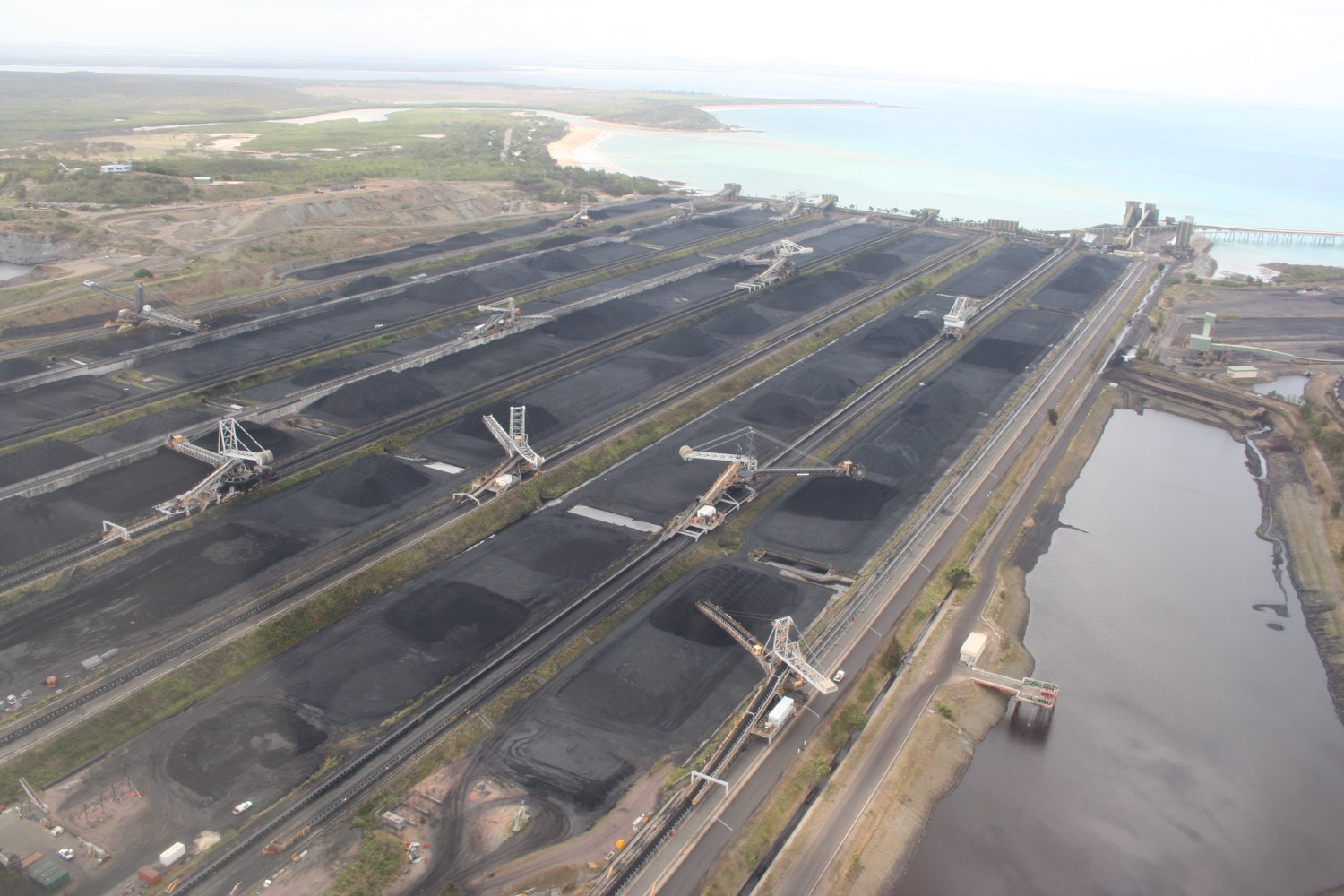
We cover the C honestly, which means we also cover coal and coke — because steel still runs on met coal, and pretending otherwise to sound clean helps no one. The energy transition needs an enormous amount of steel, and that steel, for now, needs carbon. That tension is a feature of this desk, not something we'll airbrush out.